Greenland rubies

Video
Greenland rubies
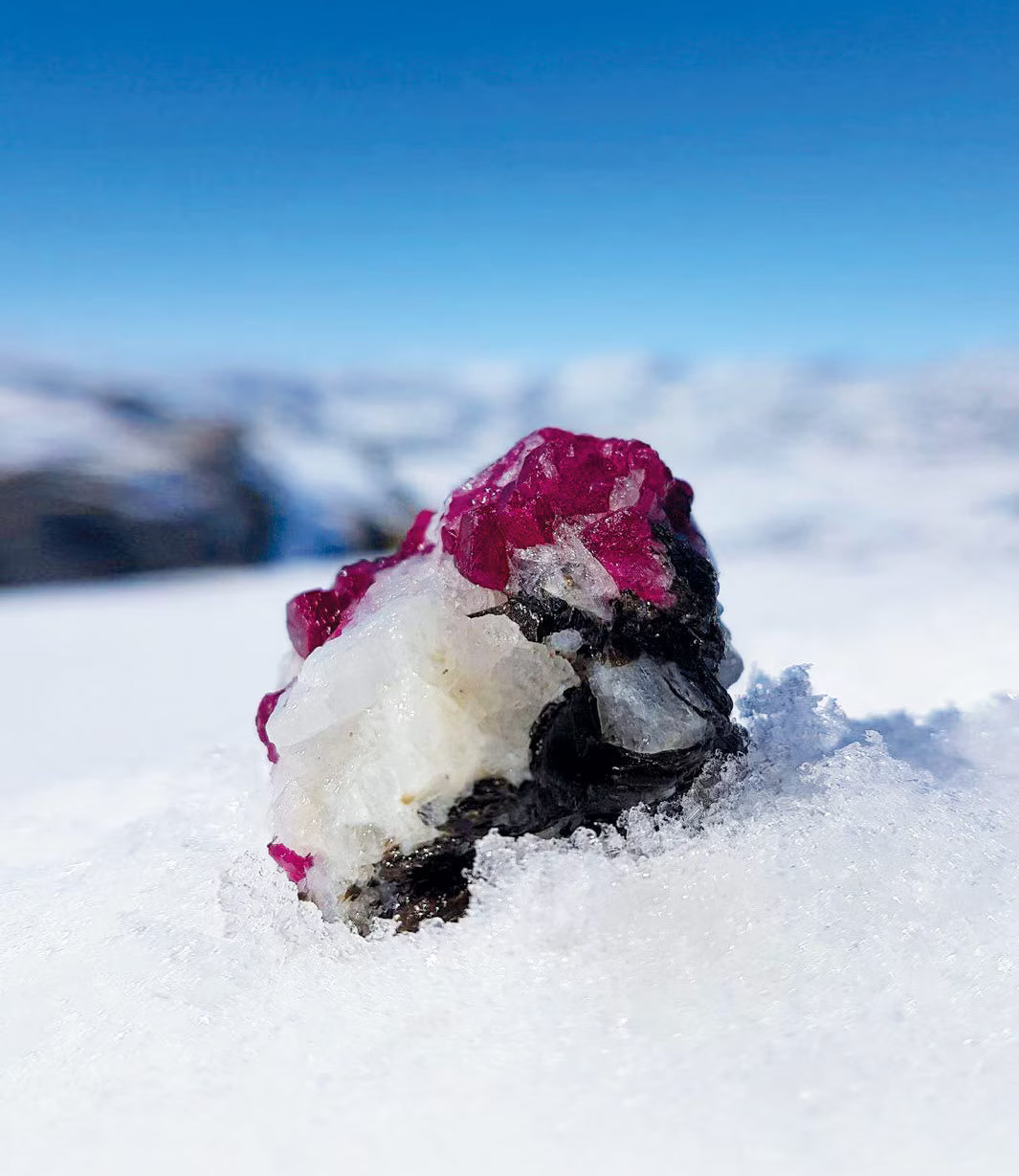
The red hidden among the ice
We imagine Greenland as a land dominated by the white of the ice, the deep blue of the fjords, and mountains rising from vast, silent landscapes.
Yet, among the ancient rocks of this Arctic island, nature has preserved something surprising: rubies with intense shades of red and pink, whose geological history is rooted in a distant past.
The contrast between Greenland's cold landscape and the warm colors of these precious stones is fascinating, making their origin particularly evocative.

Greenland rubies
Memories of the Earth
In western and southwestern Greenland, some of the oldest rock formations on our planet emerge, dating back about three billion years. It is precisely in these territories that some of the oldest ruby deposits in the world are found.
Over extremely long metamorphic processes, characterized by high pressures and temperatures, favorable conditions were created for the formation of corundum crystals, the mineral to which rubies and sapphires belong. Geological studies date the formation of the Aappaluttoq rubies to about 2.7 billion years ago.
For immense periods of time, these gems remained enclosed in the host rock, long before glaciers shaped the Arctic landscape that surrounds them today.
Perhaps this is one of the most surprising aspects of Greenlandic rubies: stones that we associate with a territory dominated by ice, but whose history began deep within the Earth, through geological processes of extraordinary intensity.
Greenland rubies
The shades of red
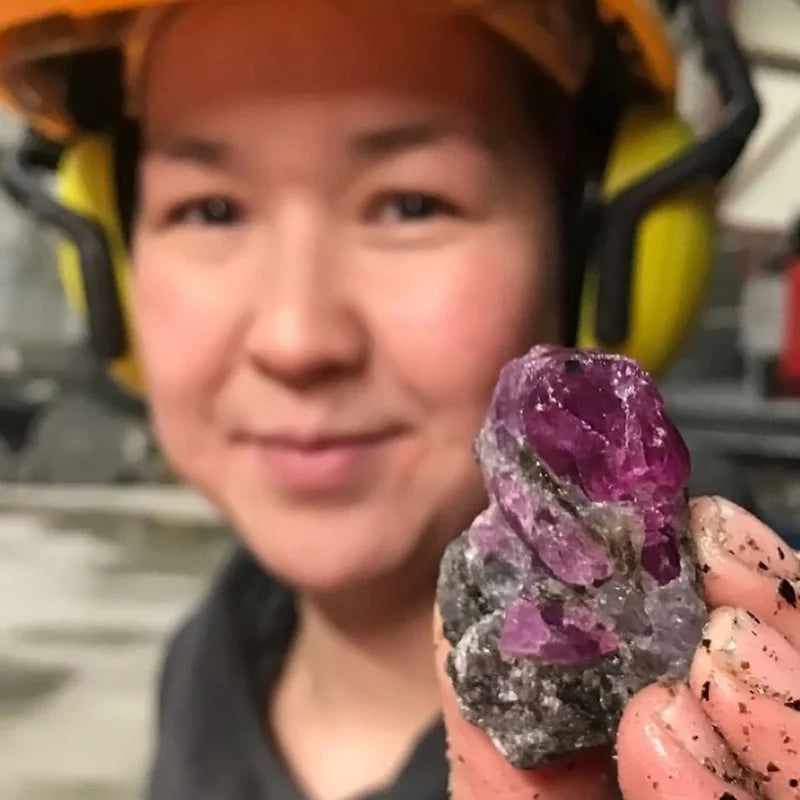
When we think of a ruby, we almost inevitably imagine a gem of intense red. But Greenland rubies tell a much more varied chromatic story.
Some display deep red tones, while others show livelier shades, close to raspberry or intense pink. In certain stones, delicate purple reflections emerge, while others show variations in color that seem to pass through the crystal.
It is mainly chromium, present in small quantities in the corundum structure, that gives the ruby its characteristic color.
It is interesting to observe how rubies and pink sapphires actually belong to the same mineralogical family. The distinction between the two varieties depends mainly on the hue and intensity of the color, with a boundary that is not always as clear-cut as one might imagine.
Transparency can also vary significantly from one stone to another.
Some crystals, sufficiently clear, are cut with faceted cuts that enhance their brilliance. Others, richer in natural inclusions, instead find in the cabochon cut a particularly interesting way to express their color.
Not all rubies need to be perfectly transparent to be fascinating. Sometimes it is precisely their natural characteristics, their nuances, and their small internal peculiarities that give the stone a recognizable personality.
Greenland rubies
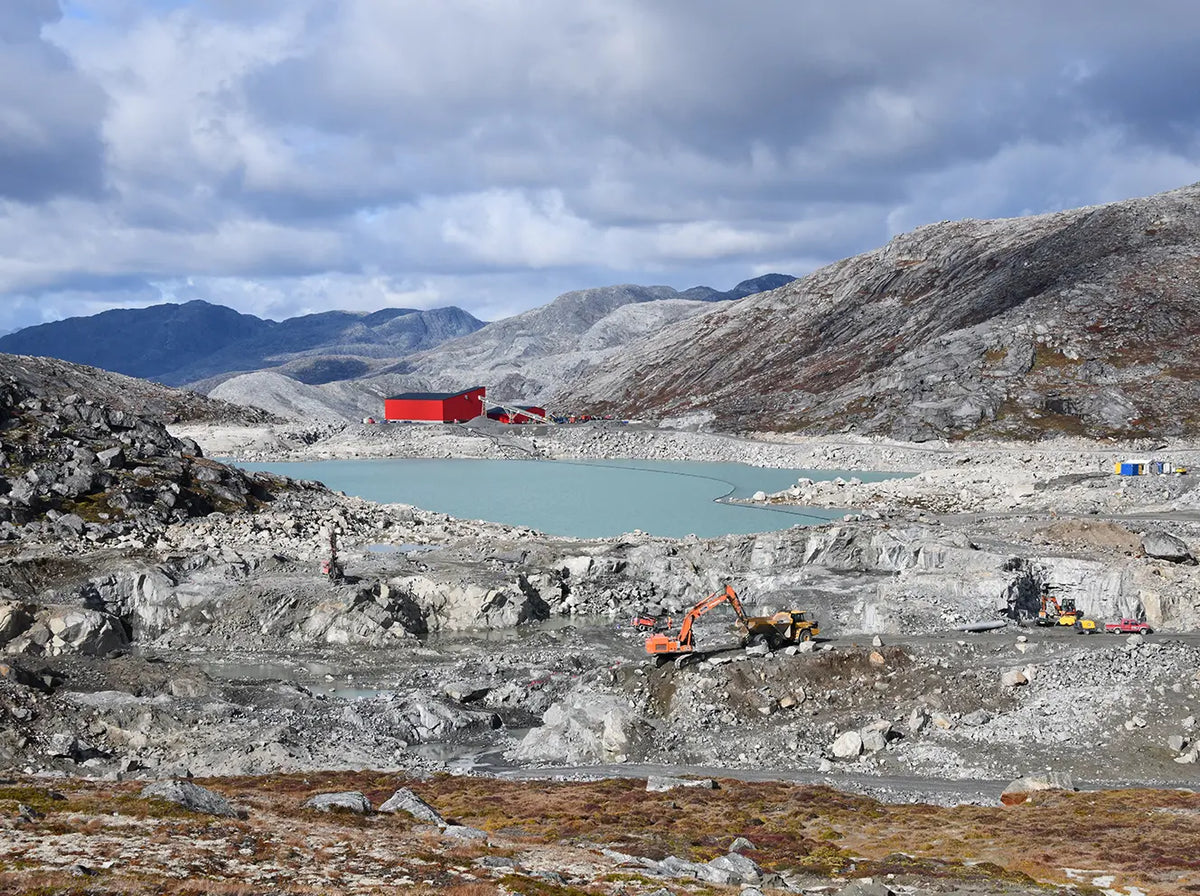
Aappaluttoq - a mine in the Arctic
For a long time, Greenland remained on the fringes of the major regions traditionally associated with the ruby trade, such as Myanmar, Mozambique, or Sri Lanka.
Although the presence of corundum was known locally, it was mainly from the geological explorations of the 1960s that Greenland's deposits began to attract increasing scientific attention.
Among these, Aappaluttoq in southwestern Greenland stands out. Its name, which in the Greenlandic language means "The Reddish One," seems to preserve an ancient reference to the color of the stones found in its rocks.
In 2017, after years of studies and preparations, the deposit entered commercial production, beginning a mining adventure as fascinating as it was brief in one of the most remote territories on the planet.
Mining in such a unique environment represented a challenge, with demanding weather conditions, logistical difficulties, and the need to operate in a delicate natural environment.
After a few years, mining operations ceased, and in 2024 Greenland Ruby, the company managing the project, declared bankruptcy.
Today, what remains of that brief mining season are the already extracted gemstones, which continue to preserve the memory of the place from which they came.
A precious testimony to a distant place, where for a short period nature revealed one of its most surprising treasures.
Greenland rubies
From Greenland to the jewel
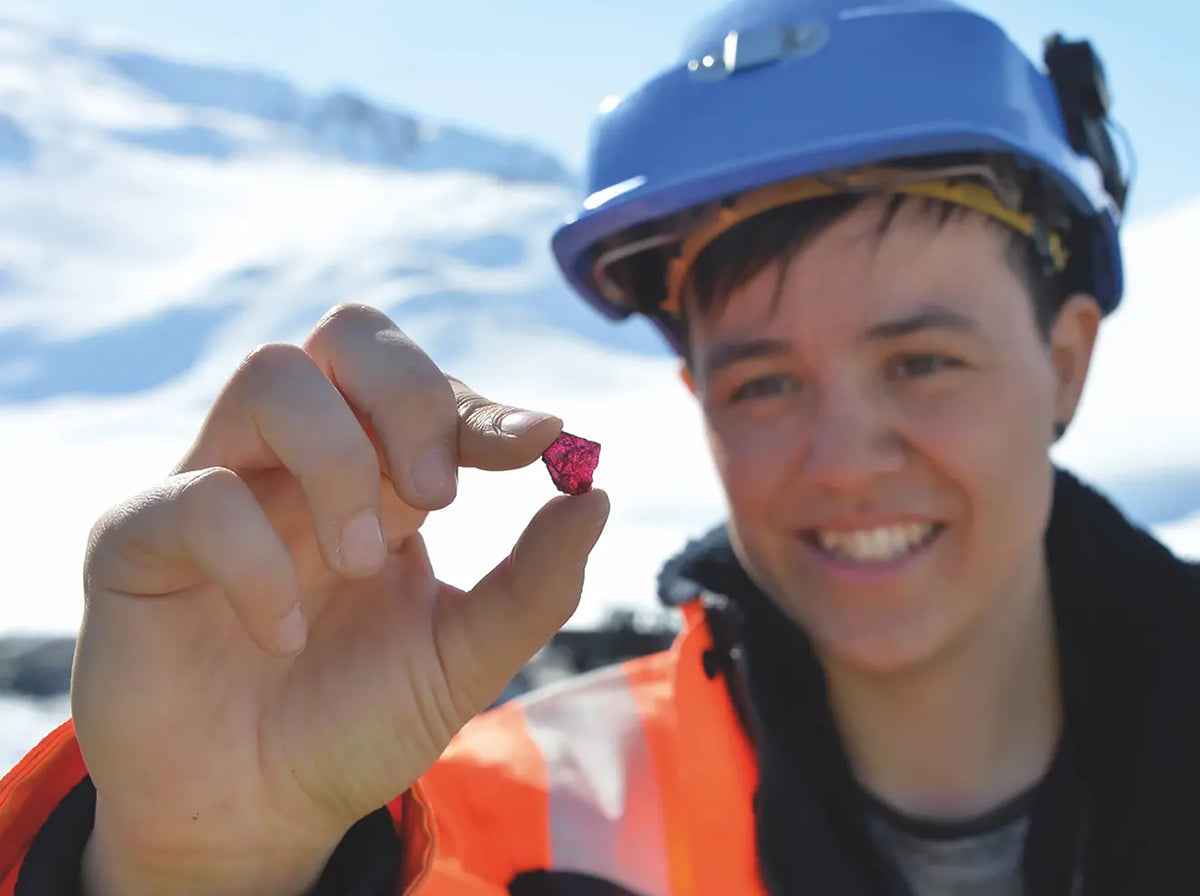
A gemstone can fascinate us with its colour, brilliance or shape. But when we also know where it comes from, its meaning takes on an additional dimension.
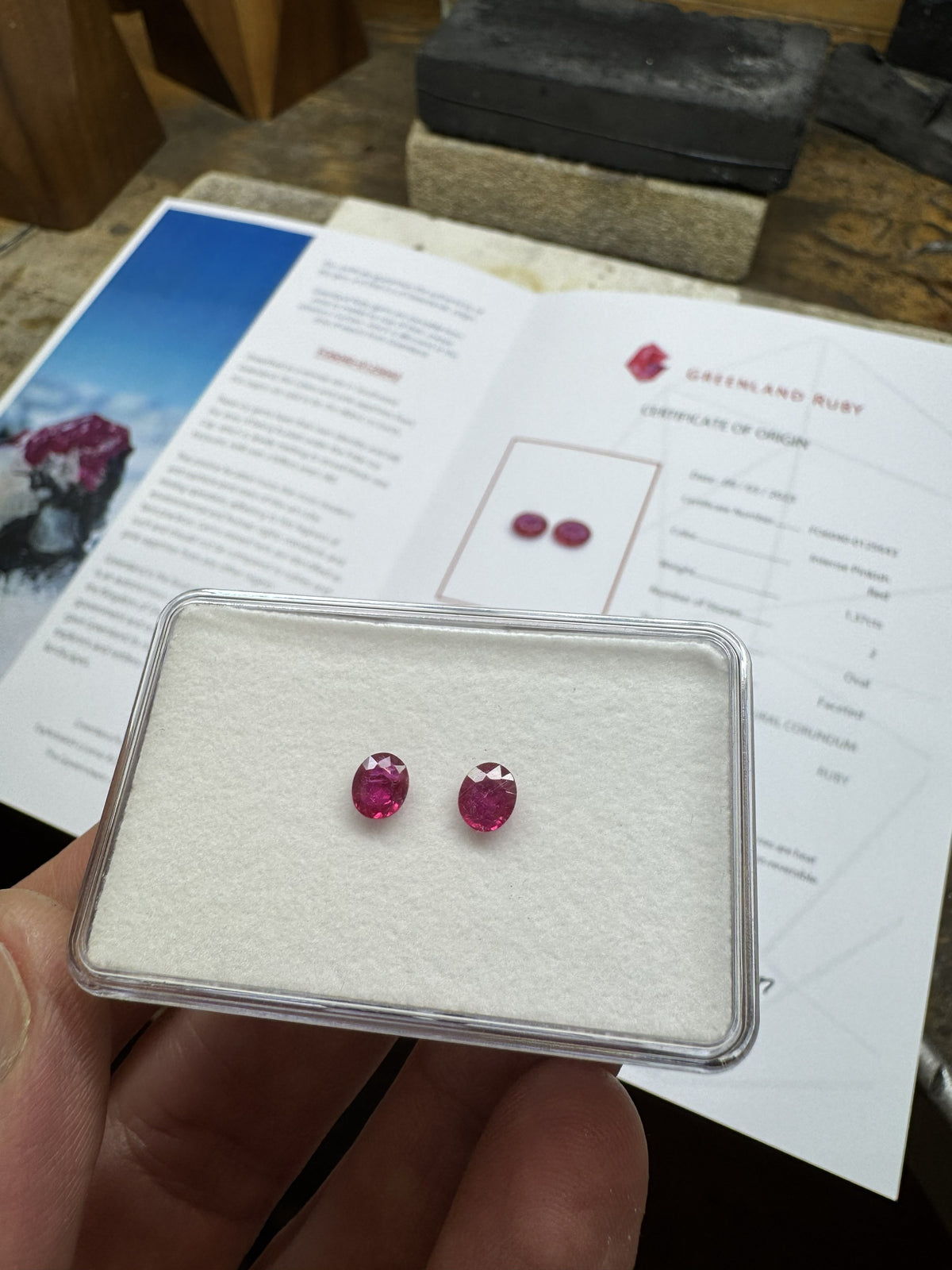
In the case of Greenland rubies, the Aappaluttoq mining project had introduced documentation systems designed to link the gemstones to their place of extraction.
Some rubies are therefore accompanied by certificates and information that attest to their origin, preserving their history even after processing and sale.
However, not all stones are accompanied by the same documentation, and knowing their origin does not necessarily mean knowing every step of the supply chain.
Alongside gemstone traceability, Greenland Ruby had also promoted initiatives in favour of the region and local communities.
Among these was the 2019 creation of the Pink Polar Bear Foundation, established to support polar research and projects dedicated to protecting the environment and the Greenlandic populations, which are particularly exposed to the effects of climate change. A portion of the proceeds from the sale of the gemstones was allocated to this initiative.
Greenland rubies
Our selection
Greenlandic rubies have fascinated us precisely because of their unique history: an ancient geological origin, a surprising variety of shades, and a connection to one of the most remote territories on the planet.
This is why we began selecting some of these gems, favoring stones accompanied by documented information about their origin.
Faceted rubies and cabochons can offer very different expressive possibilities, from the most minimalist creations to jewelry in which the color and natural character of the stone take center stage.
Each gem is considered individually, taking into account its characteristics, the available information, and the possibilities it offers in the creation of a piece of jewelry.
Because what makes a stone special is not only its beauty.
Sometimes it is also the possibility of knowing where it comes from, of imagining the landscape that sheltered it, and of carrying with you a small fragment of its history.