Australian gemstones

Australian gemstones
Fragments of a distant land
Australia holds a special place in the world of gemstones. Diamonds, sapphires, and opals come from its territory which, due to their characteristics, colors, and history, have become closely linked to their land of origin.
From the diamonds of the famous Argyle mine, now closed, to sapphires in intense shades of blue, green, and teal, to opals with their extraordinary play of color, every stone tells a different facet of a vast and geologically unique territory.
Knowing the provenance of a gem allows you to go beyond its appearance: it means knowing something more about its history and the journey that brought it from the earth to the jewelry.
Australian diamonds
A story that will not be repeated
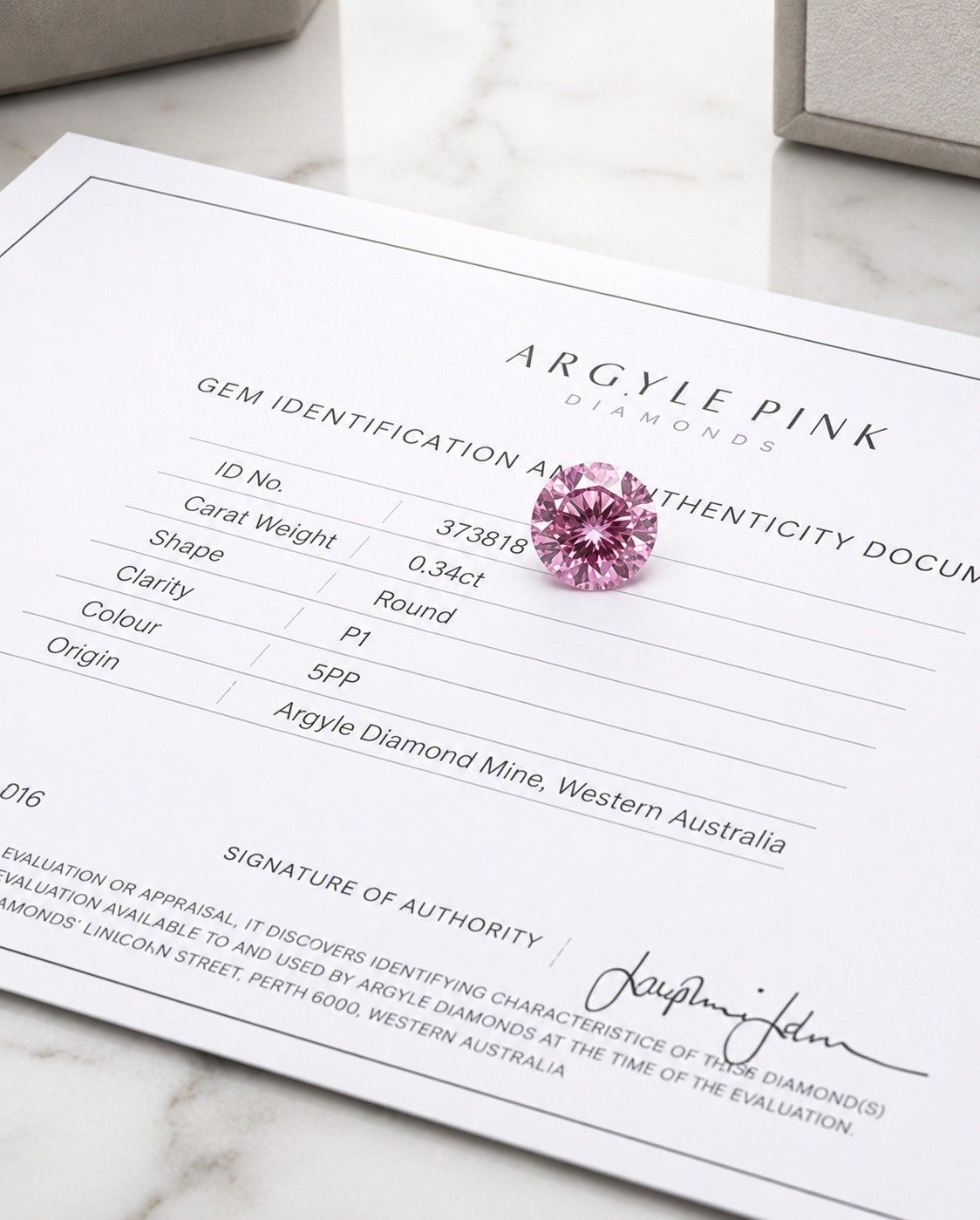
In the remote north of Western Australia, in the Kimberley region, for nearly forty years the Argyle mine has represented one of the most important and surprising places in the modern history of the diamond.
Discovered in the late 1970s and starting production in 1983, Argyle would go on to become one of the largest diamond mines in the world by volume. But what truly made it famous were, above all, some of the rarest stones it held: its extraordinary pink, red, and violet-hued diamonds.
Only a tiny fraction of the diamonds extracted at Argyle possessed these exceptional colors. It is precisely this rarity, together with the particular intensity of their shades, that made Argyle Pink Diamonds known and sought after all over the world.
In November 2020, after 37 years of operation, the mine definitively ceased extraction.
From that moment on, the story of Argyle diamonds changed: there is no longer any new production, and every diamond coming from the mine necessarily belongs to what was extracted before its closure.
With the closure, a long process of decommissioning and land rehabilitation began: mining infrastructure is being removed, the land reshaped, and the native Kimberley vegetation gradually reintroduced. Work carried out together with the Traditional Owners and destined to continue for many more years.
Australian diamonds
Beyond Argyle
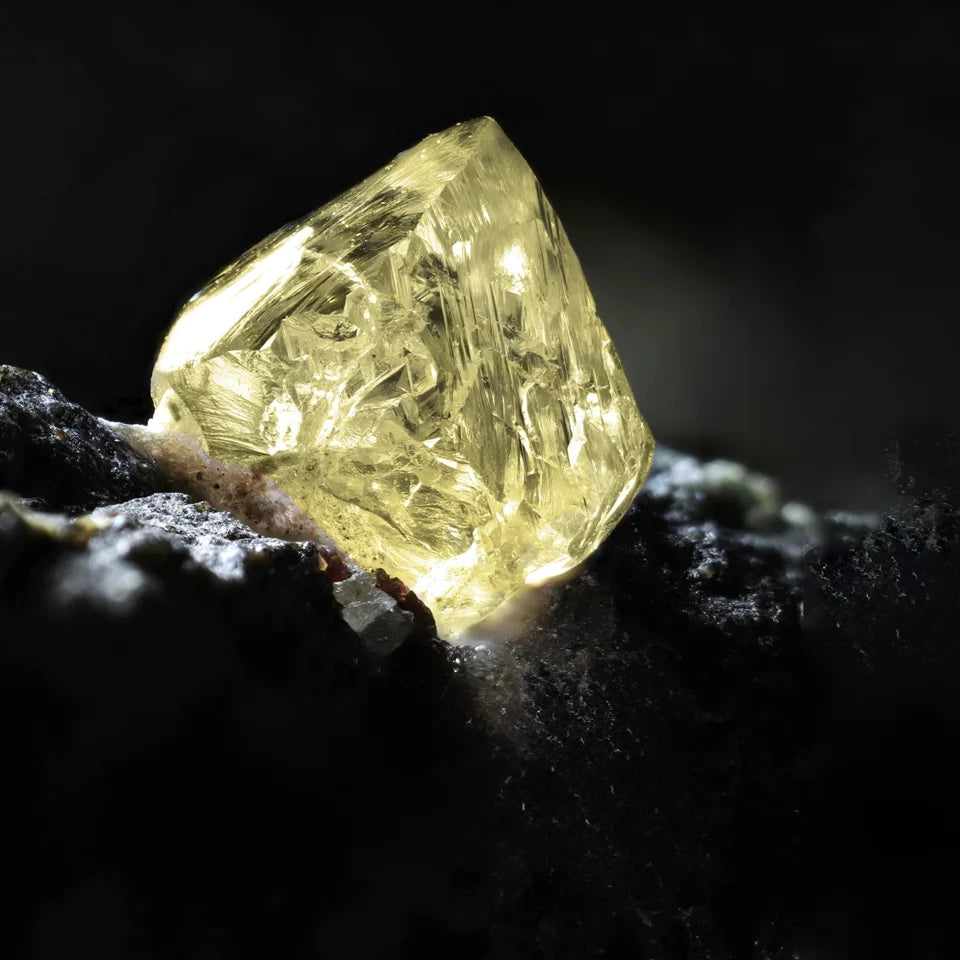
Argyle, however, is not the only name in the history of Australian diamonds. In the West Kimberley, the Ellendale mine became famous above all for its Fancy Yellow diamonds, while in the Northern Territory, the Merlin mine is also known for having produced some diamonds of exceptional size.
Today, precisely because some of these important mines are no longer in production, knowing and being able to document the origin of an individual stone takes on an even more particular significance.
An Australian diamond can thus carry with it something that goes beyond its gemological characteristics: the place it comes from and the history of the land that held it.
Choosing an Australian diamond therefore means choosing not only a precious stone, but a small fragment of a mining history that, in some cases, has come to a definitive end.
Australian sapphires
Unexpected colors
When we think of a sapphire, we almost inevitably imagine blue. But one only needs to encounter Australian sapphires to discover a much more surprising world.
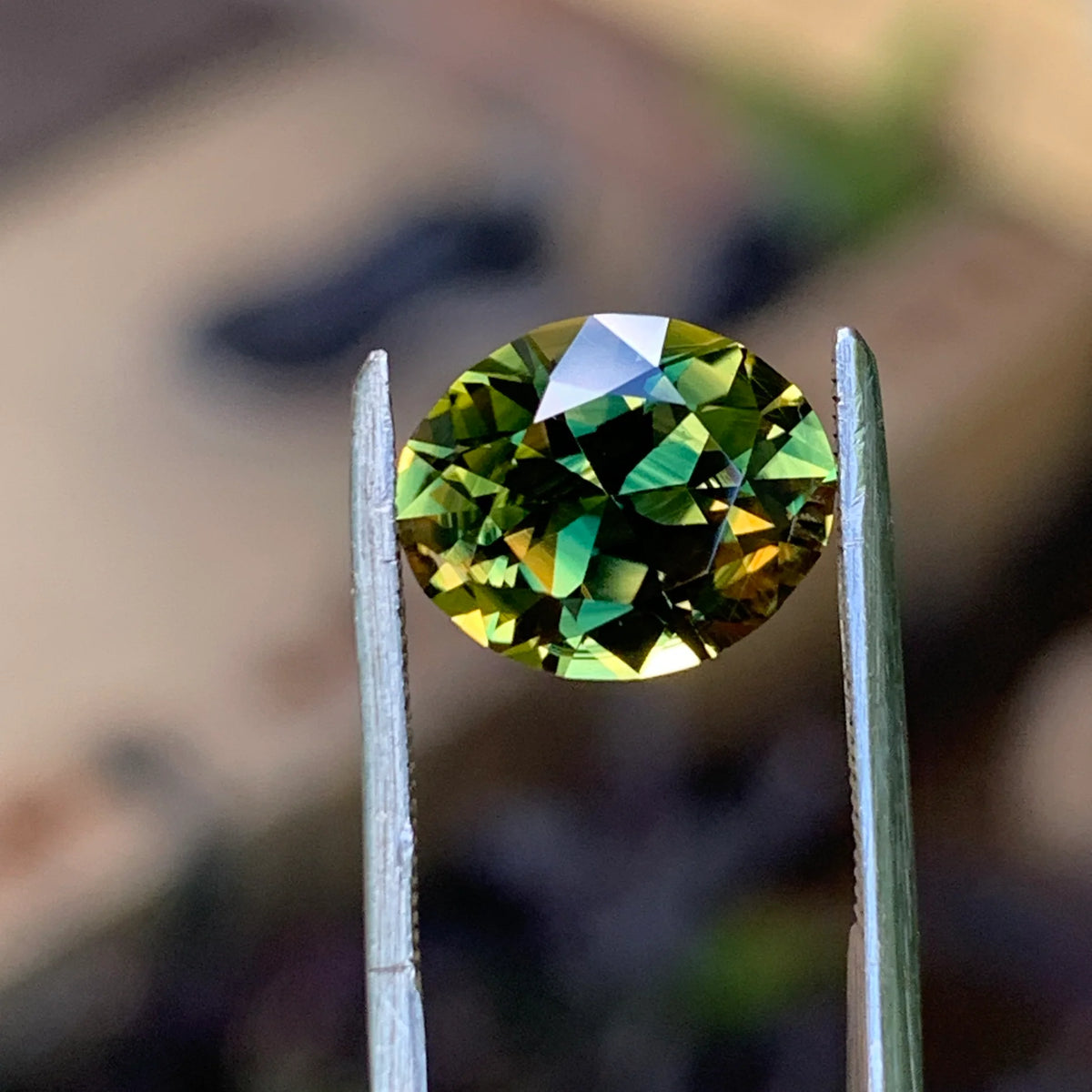
Deep blues blend with green, teal shades recall the colors of the ocean, while yellows, greens, and more unusual tones emerge from the same earth. Sometimes, different colors even coexist within a single stone, meeting without sharp boundaries and changing intensity depending on the light and the angle from which it is viewed.
Perhaps it is precisely this unpredictability that makes them so fascinating.
Australian sapphires formed millions of years ago in territories marked by ancient volcanic activity. Carried through time by water and kept in the earth's deposits, they carry with them colors and characteristics that can be deeply different from one stone to another.
Some are dark and mysterious, others bright and streaked with greens and blues; still others contain shades that seem to belong more to a landscape than to a gem.
There is no single color capable of describing the Australian sapphire. And that is precisely its charm: each stone seems to have preserved a small fragment of the landscape from which it comes.
When the provenance is known and documented, that place also becomes part of its story. This is why we seek out sapphires accompanied by information about their origin, so that along with the stone, something of the earth that guarded it can also arrive in the jewelry.

Australian opals
A universe of colors
There are stones that show their color immediately. Opal, on the other hand, seems to guard it and reveal it little by little.
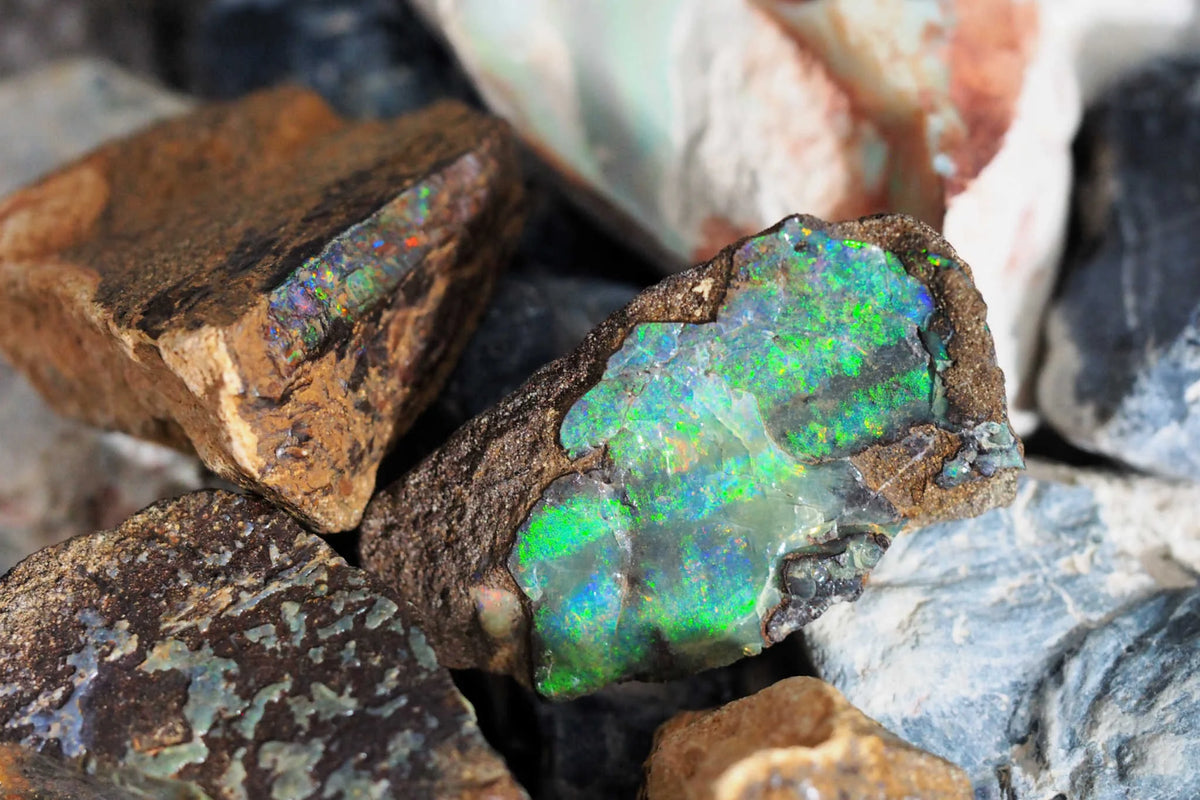
A simple movement, a change of light, a different inclination of the stone is enough for what seemed hidden to suddenly appear: flashes of blue and green, glimmers of orange, yellow, and red that ignite, disappear, and resurface in a different spot. This is the play-of-color, the phenomenon that makes every precious opal a small, constantly changing universe.
Australia is inextricably linked to the history of opal, and some of its regions have given rise to stones that have become famous all over the world.
In Lightning Ridge, New South Wales, the legendary black opals are born, in which the dark background makes the colors particularly deep and intense.
In Coober Pedy, South Australia, the earth primarily guards light and bright opals, in which the play-of-color seems almost suspended within the stone.
In Queensland, however, opal meets rock. In boulder opals, thin veins and stretches of color naturally cross the ironstone matrix in which the gem was formed. Stone and rock remain together, creating miniature landscapes that are impossible to replicate.
But the geography of Australian opal is even broader: Andamooka and Mintabie, in South Australia, and White Cliffs, in New South Wales, are other places historically linked to the mining of this extraordinary gem.
Australian opals
A light that is always different
And perhaps this is the most fascinating characteristic of opal: there will never be another exactly like it.
Each stone possesses its own pattern, its own colors, and a way all its own of reacting to light. Observing it means discovering it continuously, because you only need to change your perspective to see something that wasn't there a moment before.
When we know its origin, to this uniqueness is also added the connection to the land from which, millions of years after its formation, that small fragment of light began its journey.
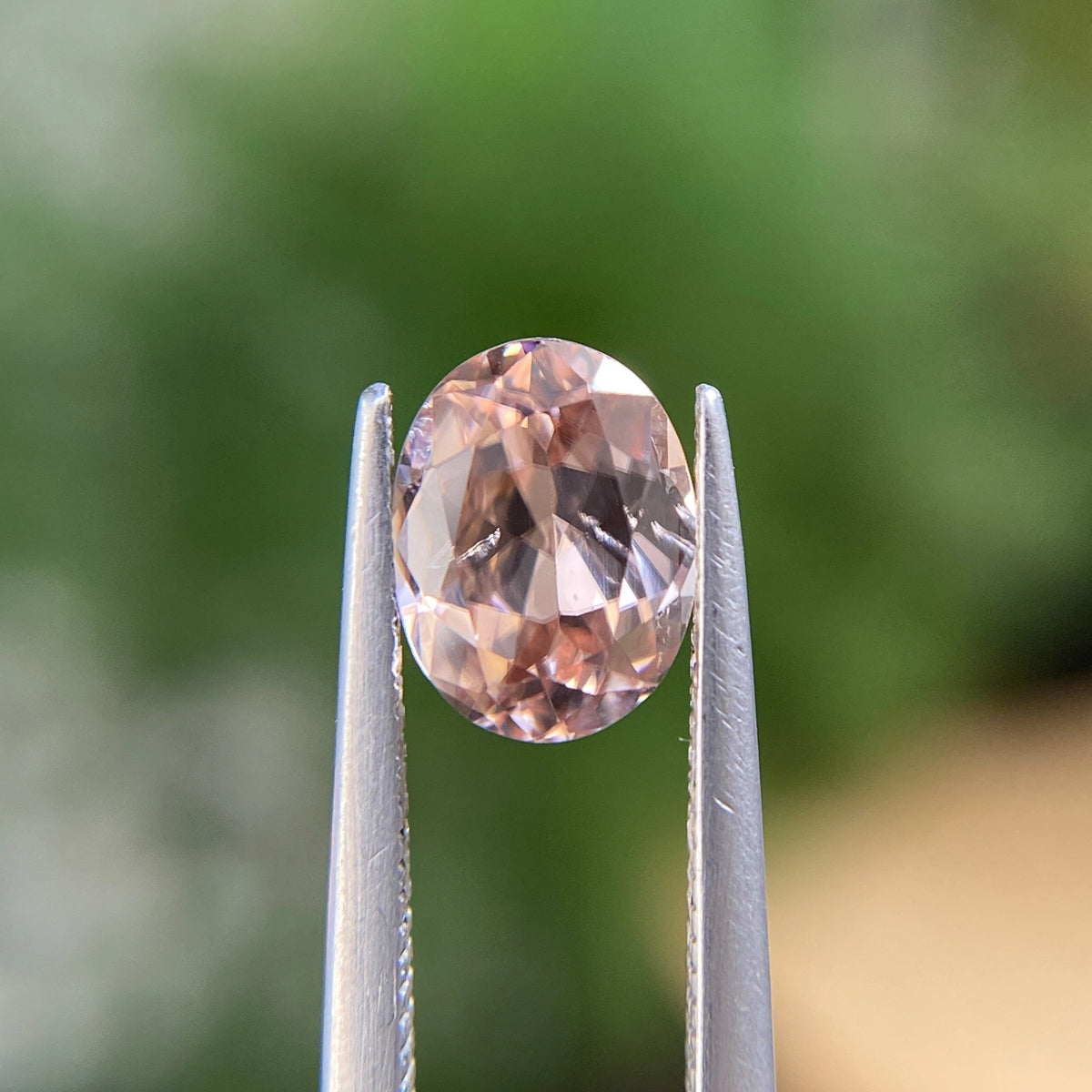
Australian zircons
A light to be rediscovered
Zircon is one of the most fascinating natural gemstones and, perhaps, one of the least known.
Its name is often mistakenly associated with synthetic stones used as diamond imitations. In reality, natural zircon and cubic zirconia are two completely different materials: the former is a mineral formed in nature over immense geological timescales; the latter is an artificially produced material.
Once cleared of this misunderstanding, zircon reveals a surprising personality.
It possesses an intense brilliance and a unique ability to disperse light into its constituent colors, creating small flashes that can recall the fire of a diamond. A characteristic that gives well-cut stones a lively and immediately recognizable radiance.
Natural zircons can appear in numerous colors: yellow, honey, orange, red, brown, green, and blue, as well as nearly colorless specimens.

Australian zircons
Traces of a distant time
Australia also harbors natural zircons. In some regions of eastern Australia, they are found in the same ancient volcanic terrains that gave rise to the famous sapphire deposits, and can be found alongside them in alluvial deposits.
But zircon also has an extraordinary connection to the most remote history of the Australian continent.
In Western Australia, tiny zircon crystals dating back about 4.4 billion years have been discovered, making them among the oldest terrestrial materials ever known. These crystals have allowed scientists to peer into the very earliest phases of our planet's history.
This does not, of course, mean that the Australian zircons used in jewelry come from those specific crystals or are necessarily the same age. But it says something extraordinary about the nature of this mineral: zircon can endure immense geological time while preserving traces of Earth's history within itself.
Perhaps it is this very contrast that makes it so fascinating: an ancient gemstone capable of radiating a surprisingly vivid light.
Long remaining in the shadow of better-known stones, natural zircon deserves to be rediscovered for what it truly is: a gem with its own identity, its own history, and a beauty that does not need to imitate that of any other stone.