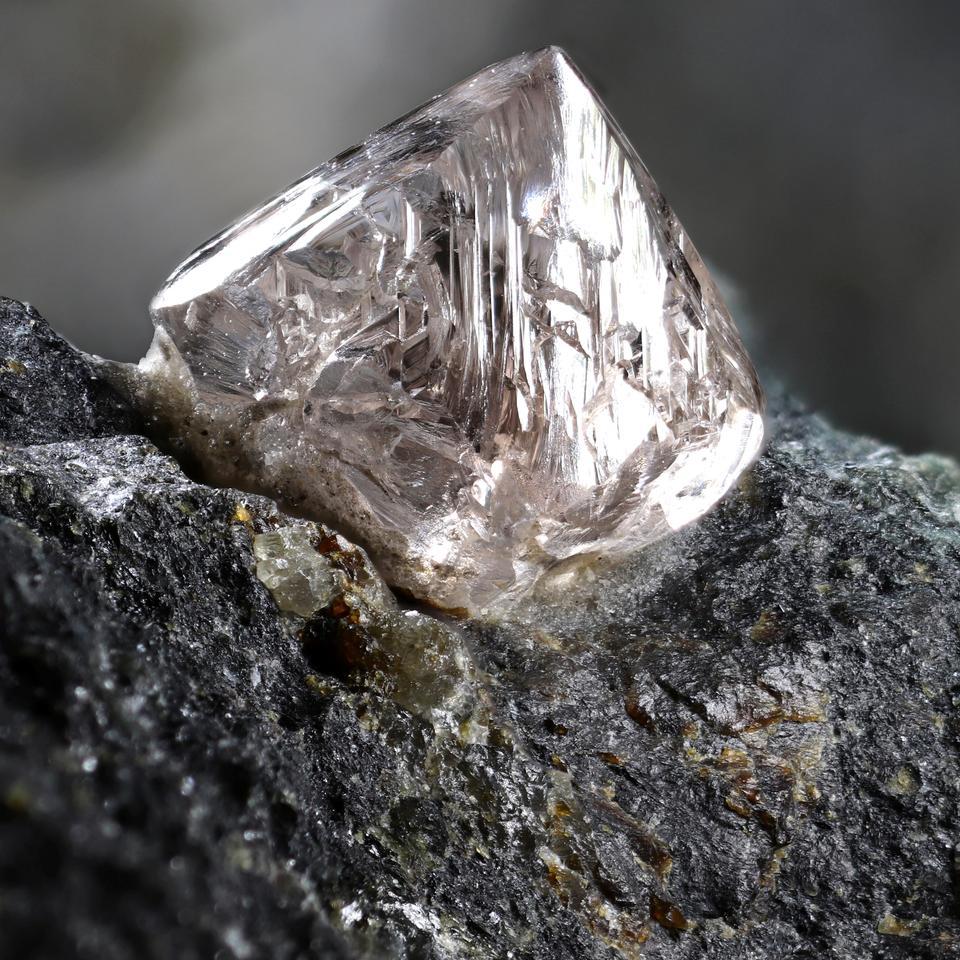
Combating the trade in conflict diamonds
The Kimberley Process
Natural diamonds and international guarantees.
Introduced in 2003, the Kimberley Process is an international initiative that brings together governments, the diamond industry, and civil society, created to combat the trade of so-called blood diamonds—rough diamonds used to finance rebel movements involved in armed conflicts.
Through rules and controls on the import and export of rough diamonds, the Kimberley Process helps prevent them from entering the legal international trade.
This system is complemented by the World Diamond Council's System of Warranties, which promotes the use of warranty statements in commercial transactions throughout the diamond supply chain, even after the stones have been processed.
These tools represent important international benchmarks for the professional diamond trade.
However, the Kimberley Process is not designed to guarantee the geographical traceability of every individual diamond, an aspect that requires specific information and documentation regarding its origin.
We have always selected our natural diamonds through trusted professional suppliers who operate in compliance with international regulations.
Alongside our traditional selection, we also offer diamonds with documented origins, such as CanadaMark, Ocean Diamonds, and Australian diamonds, which come from supply chains that allow the locations of their extraction to be known and documented.
Every diamond is selected with the same attention to quality, supplier reliability, and the transparency of the information available.

Every origin, a story
Diamond lands
Formed deep within the Earth under extraordinary conditions of pressure and temperature, natural diamonds hold a history that long precedes their encounter with humanity. Over the course of millions or billions of years, some were transported toward the surface, giving rise to the deposits we know today.
Their presence is documented in various regions around the world: from the great diamond-bearing areas of Africa to the northern regions of Canada and Russia, as well as Australia and certain parts of South America and Asia. Each territory possesses its own unique geological characteristics and mining history.
However, not all countries where natural diamonds are found have significant mining operations, and not all supply chains allow for the precise tracking of individual stones to their origin.
For those who wish to know the provenance of their diamond, we offer the option to choose stones accompanied by documented information regarding their origin. Our partnerships include supply chains linked to Canada, Australia, and Namibia, each with different characteristics and traceability methods.
On the pages dedicated to Ocean Diamonds and CanadaMark, available in the Diamonds section, we share more about these two initiatives. To learn more about the provenance of Australian diamonds, you can consult the Australia section, dedicated to precious gems and diamonds from this origin.
These are partnerships that have been established over the years, as well as relationships started more recently. It is an ongoing journey that allows us to progressively expand our selection, with the goal of providing every customer with an increasingly comprehensive choice that meets their needs, preferences, and personal values.
how diamonds are formed
From the depths of the earth to the surface
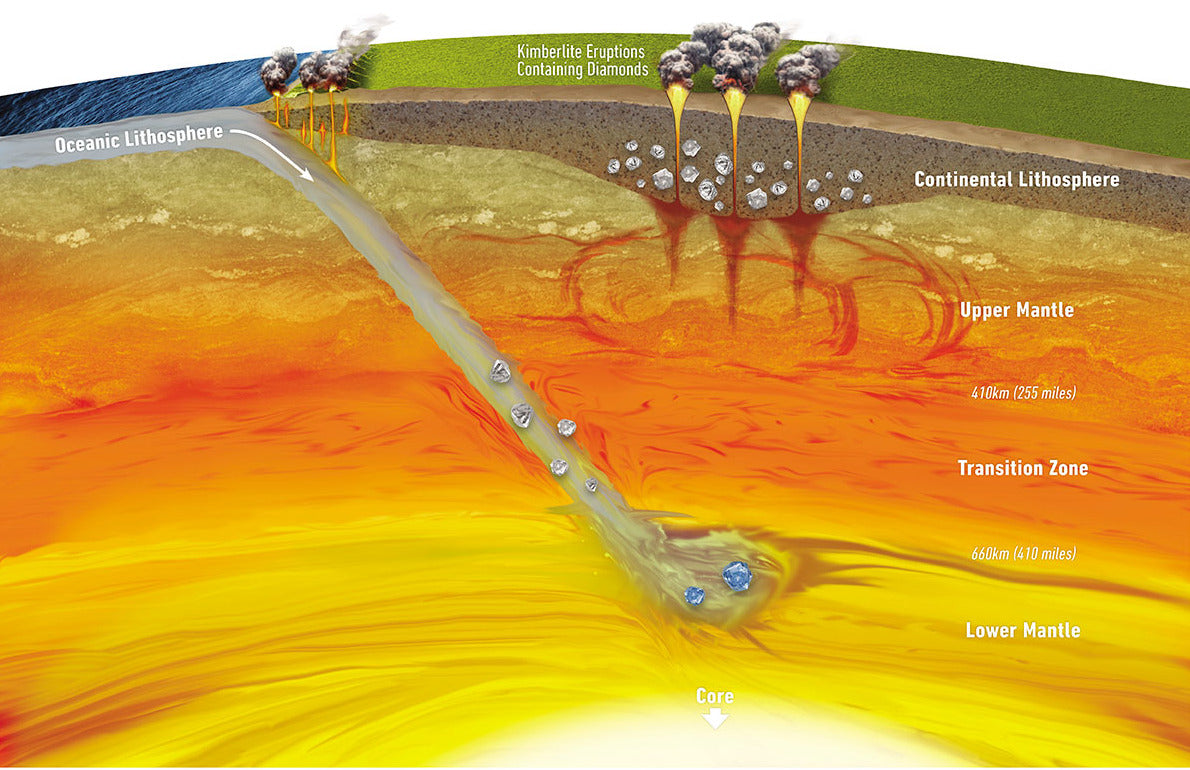
The Earth's surface is divided into large tectonic plates that move very slowly through geological processes that unfold over millions of years. When an oceanic plate slides beneath another plate, it progressively sinks into the Earth's mantle through a process called subduction.
Sediments containing carbon, such as the remains of marine organisms and carbonates, accumulate on the ocean floor. During subduction, some of these sediments are dragged into the Earth's depths, where the carbon can be released and transported by fluids or melts within the mantle.
Under specific conditions of pressure, temperature, and chemical composition, this carbon can crystallize to form diamonds, which may remain in the mantle for millions or billions of years.
Subsequently, specific volcanic eruptions can transport the diamonds to the surface through the rapid ascent of deep magmas. As they cool, these magmas give rise to volcanic rocks called kimberlites and, more rarely, lamproites, within which the diamonds can be found.
Subduction is one of the possible pathways through which carbon reaches the mantle, but not all diamonds originate from carbon derived from oceanic sediments.